

DANH MỤC SẢN PHẨM
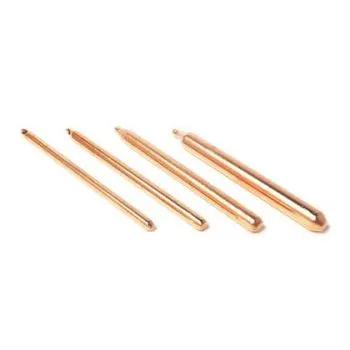
Ống dẫn nhiệt
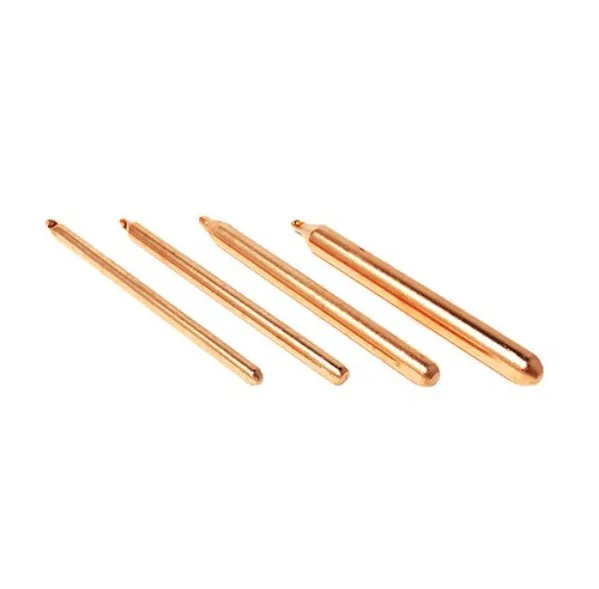
Heat Pipe
- Chức năng thay đổi mật độ dòng nhiệt
- Linh kiện thụ động
- Khả năng cân bằng nhiệt độ nhanh
-
-
Heat Dissipation Mechanism
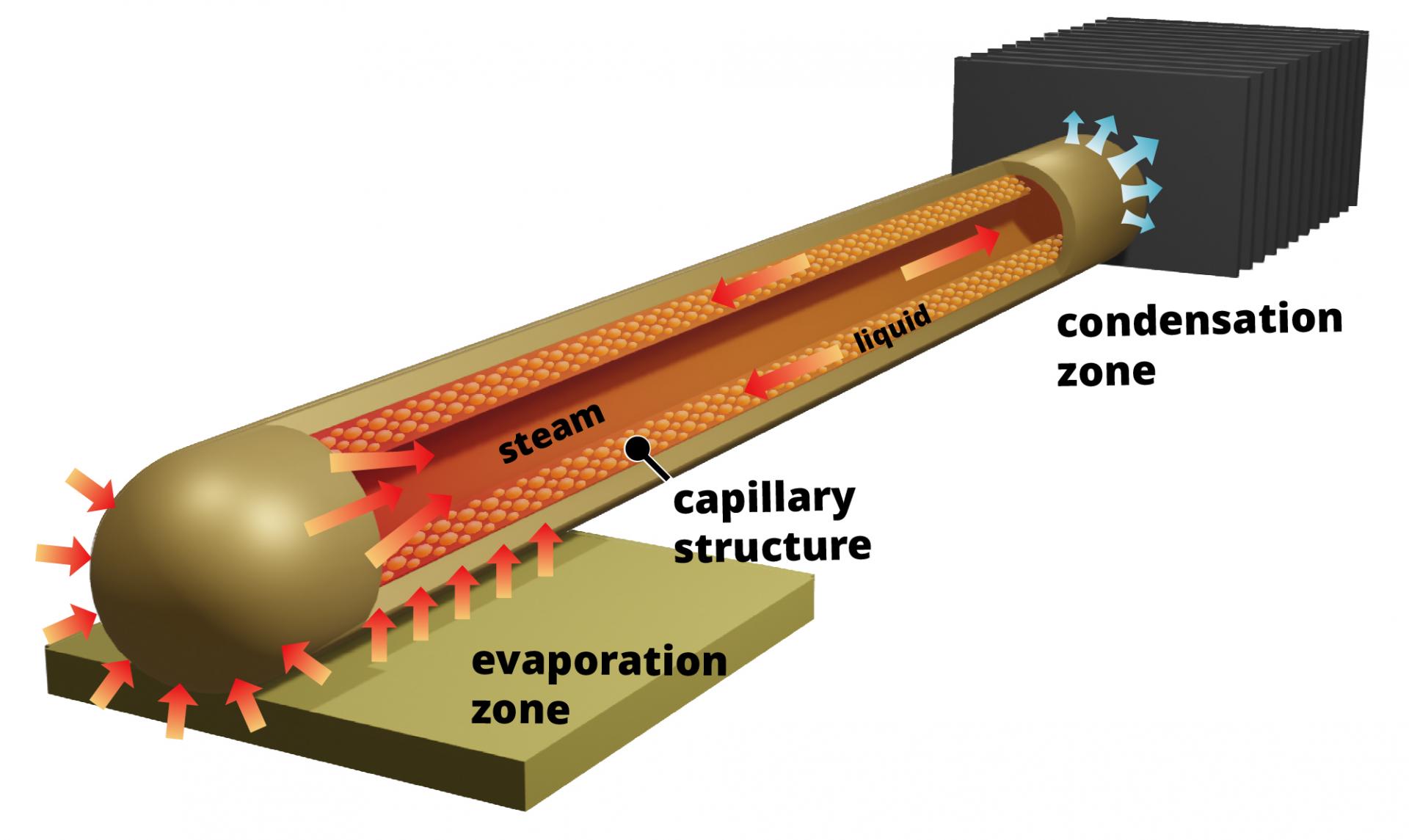
The heat pipe process first removes the internal air and then injects the working fluid with a seal. The vaporization temperature of the working fluid drops significantly under low pressure. The evaporation zone absorbs heat and vaporizes rapidly. The vapor moves to the condensation zone, exchanges heat with the external heat source, condenses into a liquid state, and then flows back to the evaporation zone by gravity or capillary force and pressure difference of the tube wall, and the cycle continues again and again. By the principle of two-phase flow, the heat transfer coefficient is about 50~100 times that of pure aluminum.
Heat Pipe Design and Manufacturing Process
Overview of the Heat Pipe Design Process
Quy trình thiết kế ống dẫn nhiệt bắt đầu bằng việc đánh giá tải nhiệt của ứng dụng, yêu cầu hiệu suất nhiệt và các giới hạn vật lý. Các kỹ sư tính toán nhu cầu truyền nhiệt và chuyển đổi chúng thành mô hình khái niệm bao gồm chiều dài vùng bay hơi và ngưng tụ, số lượng góc uốn và lựa chọn vật liệu. Tiếp theo, mô phỏng 3D dựa trên CAD được sử dụng để mô phỏng các điều kiện này, đồng thời xem xét tác động mao dẫn trong cấu trúc wick và hiệu quả chuyển pha ở các mức nhiệt độ hoạt động. Các tham số như độ dẹt, độ uốn và độ dày thành ống cũng được hiệu chỉnh theo các chỉ số hiệu suất. Ví dụ, mỗi góc uốn 45 độ có thể làm giảm công suất truyền nhiệt khoảng 2.5%. Trong khi đó, cấu hình dẹt hơn làm tăng diện tích tiếp xúc, cải thiện khả năng hấp thụ nhiệt. Sau khi mô hình được tinh chỉnh, quá trình phát triển nguyên mẫu được tiến hành để xác thực hiệu suất truyền nhiệt trước khi bước vào sản xuất.
T-Global's Manufacturing Capabilities
3D Modeling
3D modeling visualizes heat pipe geometries before production. Through software simulations, T-Global engineers test design iterations under variable temperature gradients and spatial limitations. For example, copper/water heat pipes map phase changes and fluid dynamics within tubes, using large-radius bends to limit performance loss. 3D modeling also helps in precise CNC programming and guides each dimension for thermal efficiency in ultimate products.
Thermal Testing
Thermal testing verifies a prototype's heat transfer capacity, considering ambient temperature and orientation factors. T-Global's testing rigs simulate real-world conditions to measure thermal resistance, thermal response rate, and steady-state performance. For example, an 8mm diameter heat pipe may be tested for loads up to 60W. Yet, any design bend can lower this capacity. For reliability, T-Global subjects heat pipes to high-temperature aging (210°C for 12 hours), thermal cycling (-30°C to 120°C), and thermal response tests to monitor leakage or drop in capacity. Testing guarantees each pipe satisfies performance criteria under operating duress.
Rapid Prototyping
Rapid prototyping helps T-Global expedite product iterations without heavy tooling. Prototypes can be made in about one week for custom heat pipes without complex tooling needs. Thermal and mechanical tweaks should be implemented immediately. It accelerates the development of super-thin heat pipes for smartphones and laptops, where thicknesses of 1.0mm are needed. Rapid prototyping also facilitates modifying manufacturing tolerances, like altering flattened thickness by 0.1mm to balance structural integrity with heat absorption. Such an iterative process assures that each design fulfills heat transfer standards before mass manufacturing.
Technical Specifications and Options
Heat Pipe Specifications
Diameters & Lengths
We manufacture heat pipes in compact sizes ranging from 1.5mm to 38mm outer diameters. We can create custom diameters outside of this range for applications with unique dimensional needs. Lengths can range from 80mm to 600mm, depending on the heat transfer capacity and configuration. For example, pipes with an 8mm diameter and a length of 150mm can transfer up to 60 watts at ideal conditions. Longer pipes might keep thermal transfer effectiveness of around 13 watts. Sizing flexibility lets us match each pipe to your setup's thermal needs.
Working Fluids
Our primary working fluids are distilled water (H₂O) and methanol (CH₃OH) for unique thermal environments. Distilled water suits applications operating above room temperature and performs up to 325°C. It provides thermal stability and is ideal for moderate to high-temperature systems. With a lower freezing point, methanol handles low-temperature applications and operates as low as -75°C. Preventing freezing at subzero temperatures benefits outdoor or extreme-environment electronics. Our pipes fulfill thermal management standards throughout sectors with these fluids.
Wick Structures
Our heat pipes include wick structures that optimize capillary action for varied applications. Sintered wicks with powder adhered to the pipe's inner walls offer high thermal performance when heat pipes operate against gravity. Grooved wicks have shallow grooves along the inner surface and are lighter and more cost-effective. Further, mesh wicks provide balanced capillary action and thermal response in compact, portable systems where weight and flexibility are key. Proper wick construction affects pipe heat transfer efficiency in multi-directional configurations.
Guidelines for Bending and Flattening Heat Pipes
Bending and flattening heat pipes demands precise control to preserve thermal conductivity. We recommend a minimum bending radius of 2-3 times the pipe diameter for bending. For example, a 6mm diameter pipe should keep a bending radius around 18mm to avoid internal deformation, which can lower thermal performance after the first bend. When flattening, we use exacting standards to decrease the impact on heat flow. Pipes should be flattened only to half their diameter (e.g., Ø6mm to 3mm thickness). Our custom shapes maintain heat conductivity thanks to such suggestions, which optimize thermal transfer even in convoluted geometries.
Quality Assurance and Testing
Thermal Performance Testing
We conduct thermal performance testing to assess each heat pipe's transferring and dissipating heat under specific conditions. Our testing setup uses heat flux and thermal resistance measurements across the pipe's evaporator, adiabatic, and condenser sections. E.g., we set a temperature gradient between the heating source and the condensation end. It helps us calculate the pipe's effective thermal conductivity. The process will enable us to measure conductivities up to 200,000 W/m·K. We simulate real-world applications while testing under horizontal and vertical alignments, so heat pipes deliver the same efficiency level regardless of positioning. Our thermal response rate tests evaluate how fast each heat pipe reaches steady-state conditions. It is key to immediate heat transfer applications, including electronics and automotive systems.
Reliability Tests
Our reliability tests surpass standard endurance checks to evaluate performance stability over lengthy use and exciting conditions. We conduct high-temperature aging tests, which reveals leaks and durability. For applications with temperature fluctuations, we apply thermal cycling in repeated 10-hour cycles, reaching up to 600 cycles to replicate years of active wear. We also perform accelerated life tests at 140°C for 1,000 hours for less than 7% degradation in thermal performance. Our heat pipes undergo thermal response assessments and continuous life testing under working conditions for structural integrity and thermal performance. Such testing protocols guarantee that our heat pipes are durable and suit demanding industrial applications.
Custom Heat Pipe Solutions
Customization Process
Our customization analyzes your heat load specifics, geometry constraints, and interface materials. First, we review source temperature, desired spread or dissipation, and the maximum heat flux before designing using 3D modeling. The model assesses machining tolerances and structural uprightness for complex shapes or high-heat-load scenarios above 50 watts. We use rapid prototyping tools for initial prototypes with a turnaround of one week for simple models or two weeks for complex ones needing custom tooling. We conduct thermal validation tests to measure R, Keff, and response time under steady-state and varied-angle conditions. If performance metrics deviate, we iterate so that each design reaches production standards.
Design Flexibility
We can create heat pipes with unique designs. Diameters can range from 1.5mm up to 38mm, and lengths from 80mm to 600mm for different applications. Our capabilities can attain bends at minimum radii (e.g., 12mm for a 4mm diameter) without thermal loss. Yet, tighter bends cause a controlled reduction. Flattening increases surface contact. For instance, a Ø6 pipe flattened to 3mm realizes optimal thermal contact with larger heat sources. Also, we incorporate multi-angle and multi-plane configurations for assemblies that demand alignment within compact spaces. To avoid performance decay, each configuration is stress-tested from bending to flattening.

Thermal conductor element

Large heat transfer, highly efficient

Fast temperature uniformity

Use with a heat sink or fan