

Introduction to the Capillary Structure of Heat Pipes
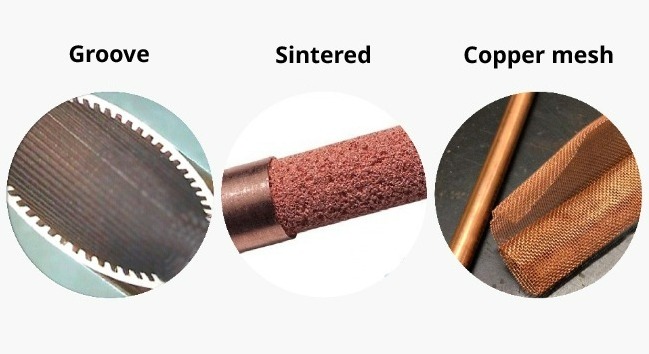
When a heat source is situated higher than the heat sink, and a heat pipe is needed for heat transfer, the working medium inside the heat pipe is transferred from the condensing end back to the vaporization end via capillary action. This process occurs thanks to the capillary structure within the heat pipe, enabling the medium to return to the heat source even when working against gravity.
In this scenario, where the vaporization end is higher than the condensing end, the medium must overcome gravity through capillary force. Current capillary structures include grooved, sintered, and mesh designs, each suited for different conditions. Among these, the sintered capillary structure offers better resistance to gravity when the vaporization end is above the condensing end, but not all sintered designs can fully counteract gravitational effects.
To achieve optimal performance, it is essential to collaborate with the T-Global team to discuss and adjust the design parameters of the heat pipe based on the specific application and requirements.